 AVENUES EARLY CHILDHOOD SERVICES
What’s Normal Now
The age-by-age guide to hard moments. See what’s often normal at your child’s stage, what to say in the three moments parents find hardest, and when it’s time to ask for help.
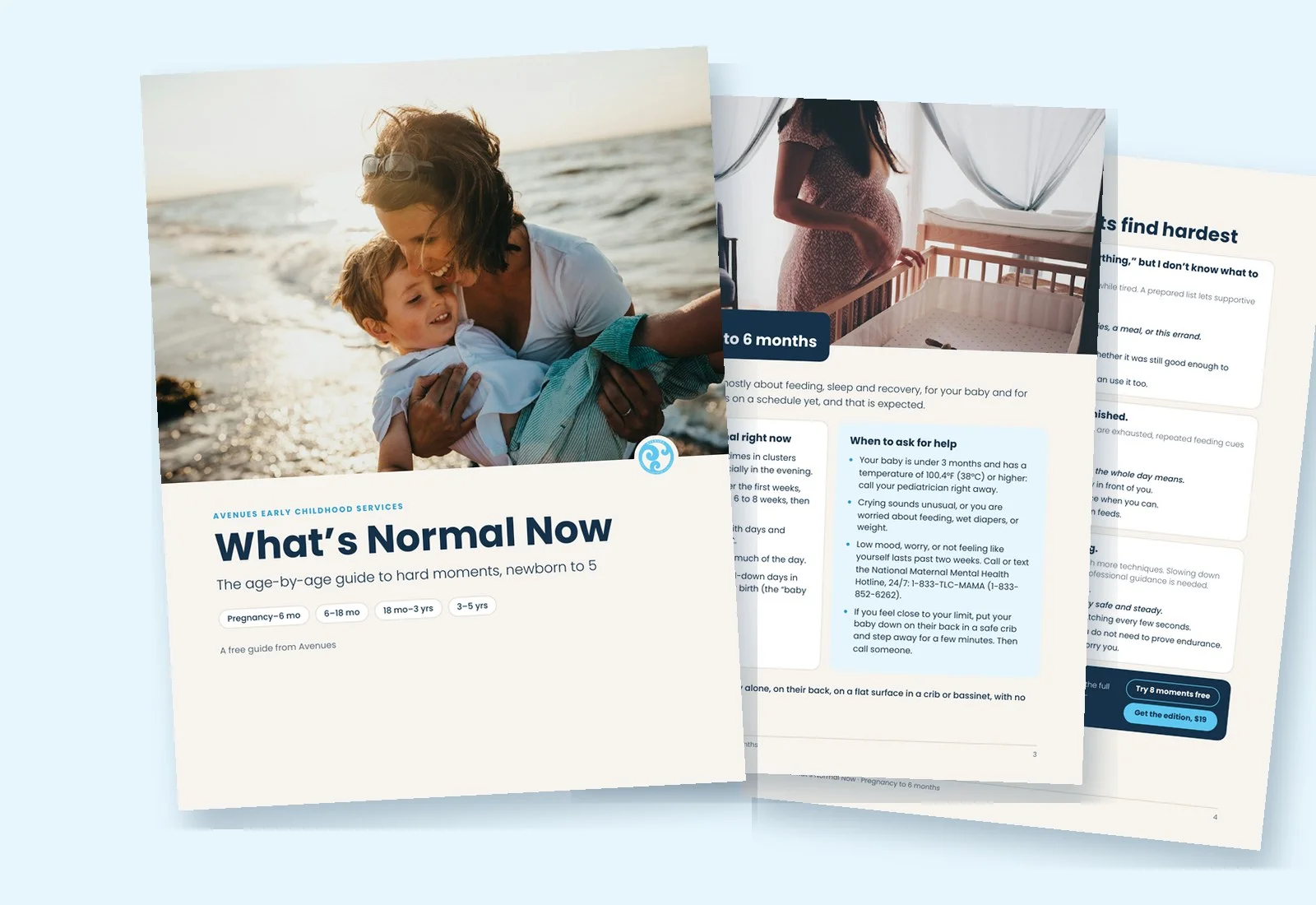
One guide, every stage from pregnancy to 5
Hard moments change as your child grows. Each stage has its own pages, so you can read where you are now and look ahead to what’s coming.

Pregnancy to 6 months
Feeding again and again, crying that won’t stop, and how to ask for help.

6 to 18 months
Sleep that falls apart, wariness of new people, and first foods.

18 months to 3
Hitting, bedtime battles, and knowing when they’re ready for the potty.

3 to 5 years
After-school meltdowns, “I hate you,” and getting ready for kindergarten.
What each stage gives you
Short, calm, and written for the moment you’re in.
What’s often normal
The behaviors many families see at this age, so you know what’s typical and what isn’t a sign that you’re doing it wrong.
The 3 hardest moments
For each one: why it happens, what to prepare, what to say, what to do, and how to repair afterward.
When to ask for help
Clear signs it’s time to call your pediatrician or another professional, plus trusted places to check milestones.
A preview from Stage 3
My toddler hits when they are angry.
When anger rises fast, a toddler’s hands move before their words can. It usually means “I’m overwhelmed,” not “I want to hurt you.”
What to say:
“I won’t let you hit. You can be angry. I’ll help you keep everyone safe.”
Then calmly block the hand, check on anyone who was hit, and show them what to do instead once things are calm.
From Avenues Early Childhood Services. Avenues supports parents and caregivers from pregnancy through age five, including free Home Visiting and SEED consultation for eligible families in New Mexico. This guide is general education, not medical advice or a screening tool.
Get the free guide
Pick your child’s stage above and we’ll send it right away.
This guide is general education, not medical, developmental, or clinical advice. If you have concerns about your child’s health, development, or safety, contact your pediatrician. In an emergency, call 911.